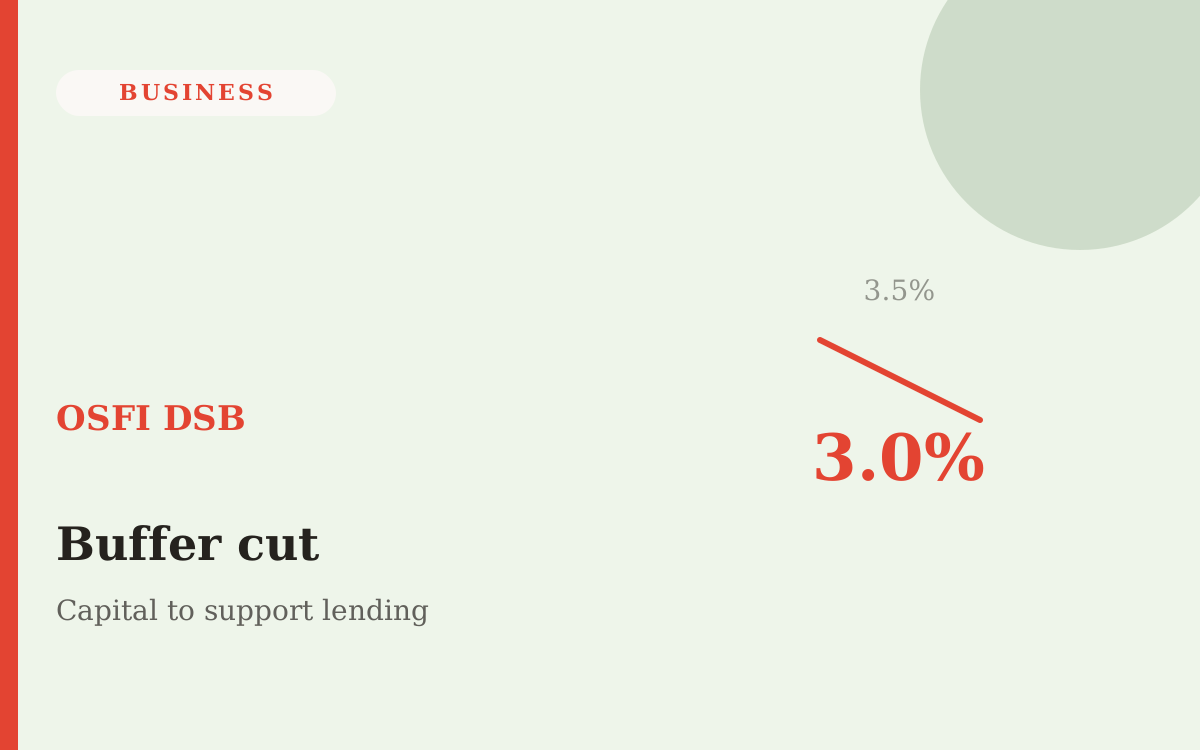
Not every buffer story this year is about building more capital. Canada’s Office of the Superintendent of Financial Institutions cut the Domestic Stability Buffer from 3.5 percent to 3.0 percent of risk-weighted assets — the first change since June 2023 — and lowered the top of the DSB range to 3 percent from 4 percent.
What banks are being told
Domestic systemically important banks should still target Common Equity Tier 1 of at least 11.0 percent. The cut is not a free pass to thin capital. It is permission to deploy some of the cushion already built, so credit can support an economy adjusting to trade realignment, defence and infrastructure spend, resources, and AI investment. OSFI’s stress-test message: the big banks can absorb hits and keep lending.
Why this counts as macroprudential
The DSB is Canada’s domestic cousin of a countercyclical or systemic risk buffer. Raising it in quiet years stores resilience. Cutting it when the cycle or the structure of the economy needs bank balance sheets is the releasability doctrine in action — the same doctrine the UK is writing into O-SII practice and Europe is baking into positive-neutral CCyB designs.
What to watch
Loan growth to businesses in trade-exposed and investment-heavy sectors; whether markets treat the cut as confidence or complacency; and whether household credit standards stay tight even as wholesale capital requirements ease a notch.
Digestica’s read: Canada is not declaring an emergency. It is saying the capital war chest was built for this kind of structural shift — use some of it.
Digestica will update this desk note as OSFI communications and Canadian bank capital disclosures move. Primary context: OSFI Domestic Stability Buffer Decision Summary Note, June 2026.