The loan-growth headline got the clicks. The quieter half of Korea’s 13 August package is more important for anyone searching “macroprudential” today: a new Household Sector Systemic Risk Buffer Capital rule, tied to the household debt-to-GDP ratio.
How the buffer works
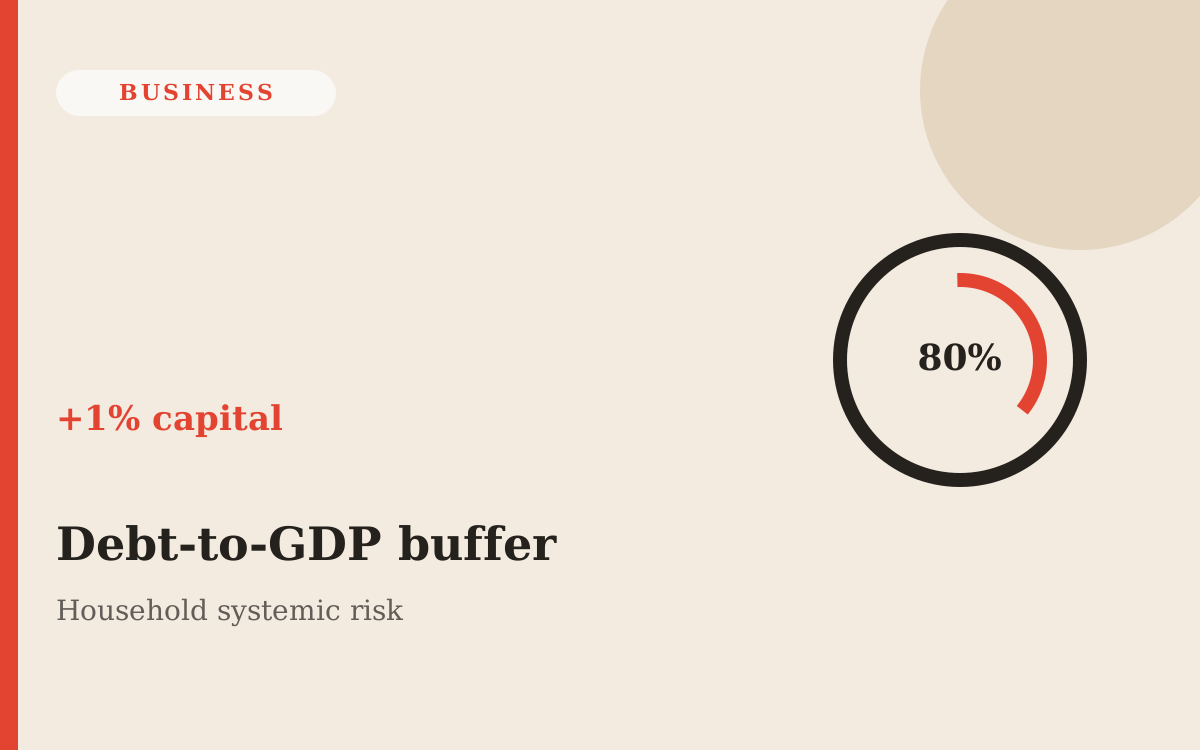
If household debt relative to GDP stays above a medium-term management target of 80 percent, banks will have to set aside up to an additional 1 percent of capital. Tougher risk weights on high-risk mortgages arrive on the same timetable — next year, not this week. That is stock resilience, not flow management. The growth-cap dial decides how fast credit expands this year. The buffer dial decides how much loss-absorbing equity sits under that stock when the cycle turns.
Why debt-to-GDP is the trigger
Korea’s household leverage has been a multi-year systemic worry for the IMF, the Bank for International Settlements, and Seoul’s own financial stability reports. Caps and DSR rules lean on new originations. A debt-to-GDP buffer leans on the stock. When leverage is already high, even “reasonable” new lending can leave the system fragile. Linking capital to that ratio is how authorities try to make banks internalise the externality.
The policy paradox
Easing the 2026 volume target while announcing a harder capital regime for 2027 looks inconsistent until you separate horizons. Near term: unblock genuine demand and housing supply finance. Medium term: stop treating high household debt as someone else’s problem. Markets that only price the ₩30 trillion will miss the capital cost that comes later.
Digestica’s read: if you only remember one phrase from this week’s Korea package, make it “household systemic risk buffer.” That is the macroprudential instrument people will still be searching when the loan open-run stories fade.
Digestica will update this desk note as implementing rules, risk-weight tables, and household debt-to-GDP prints land. Primary context: FSC 13 August 2026 real-estate financial package; Asia Business Daily detail on the household buffer.