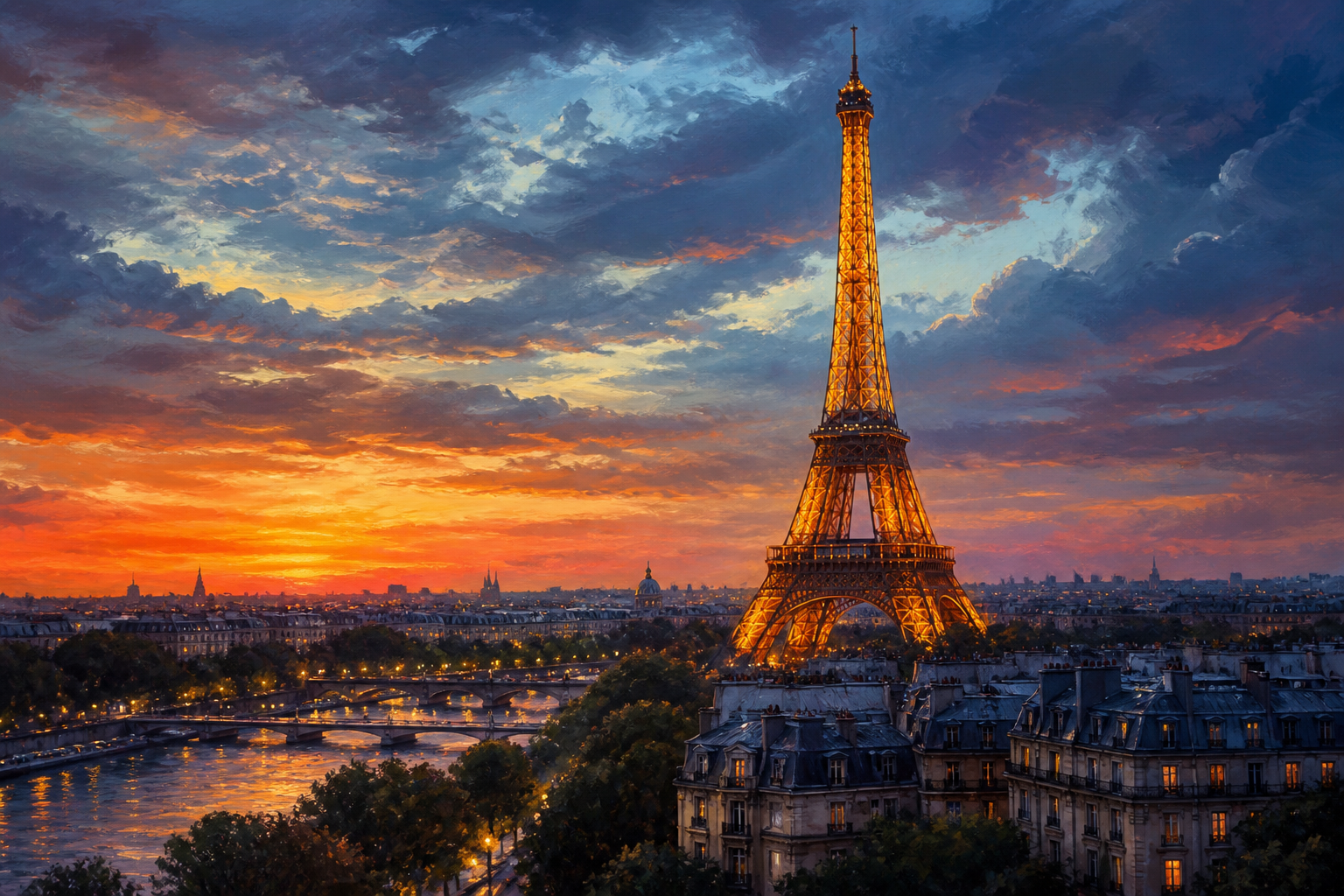
Eiffel Tower belongs to the Common Era — dated here to c. 1889 CE at Paris, France. Dates mark a scholarly centre of gravity (dedication, completion, or iconic phase), not a single foundation day.
Gustave Eiffel’s iron lattice was meant as a temporary Expo stunt — then became the world’s most recognisable structure.
How it amazes the brain
18,000 iron pieces, 2.5 million rivets, wind-aware openwork. It was the tallest human-made structure until 1930.
Why it counts as a wonder
It never needed a contest ballot to scramble the brain: scale, craft, or sheer improbability is enough.
Critics called it a factory chimney. The brain now can’t unsee Paris without it.
On dating
CE means years after the traditional birth of Christ. A monument listed as c. 1889 CE may have been founded earlier, rebuilt later, or become famous only in one phase. Engineering wonders (dams, tunnels, orbiting labs) are dated to opening or assembly.
This is story 20 of 100 in The Trend Ledger’s illustrated desk on world wonders raised after the birth of Christ — the companions to our BCE series.